SLCP’s impact in Elevate Textiles’ supply chain: A Tier 2 manufacturer case study

Faced with the growing complexity of social compliance, global manufacturer Elevate Textiles turned to SLCP five years ago to streamline its labor and social auditing processes across its own Tier 2 production facilities. With 70% of its 36 global Tier 2 facilities already implementing the Converged Assessment Framework (CAF), Elevate Textiles is rapidly scaling SLCP across its operations in 13 countries. As a specialist in fabric and thread manufacturing, the company manages a diverse workforce, with facilities ranging in size from 170 to 2,000 workers.
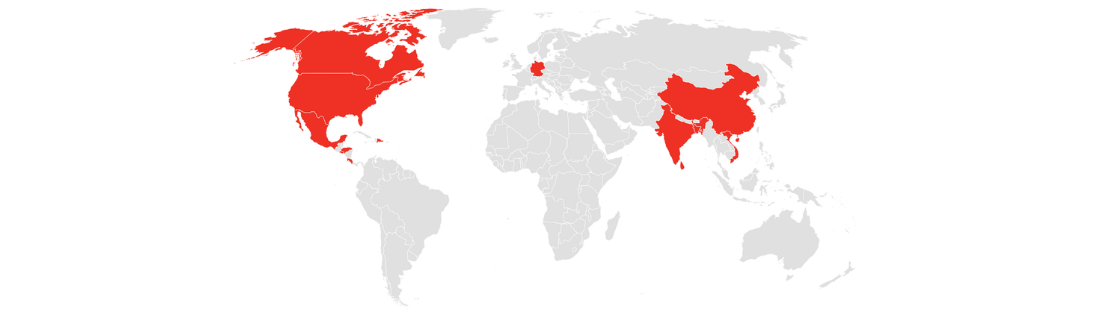
Distribution of Elevate Textiles’ Tier 2 facilities worldwide
Strengthening Human Rights Due diligence through SLCP
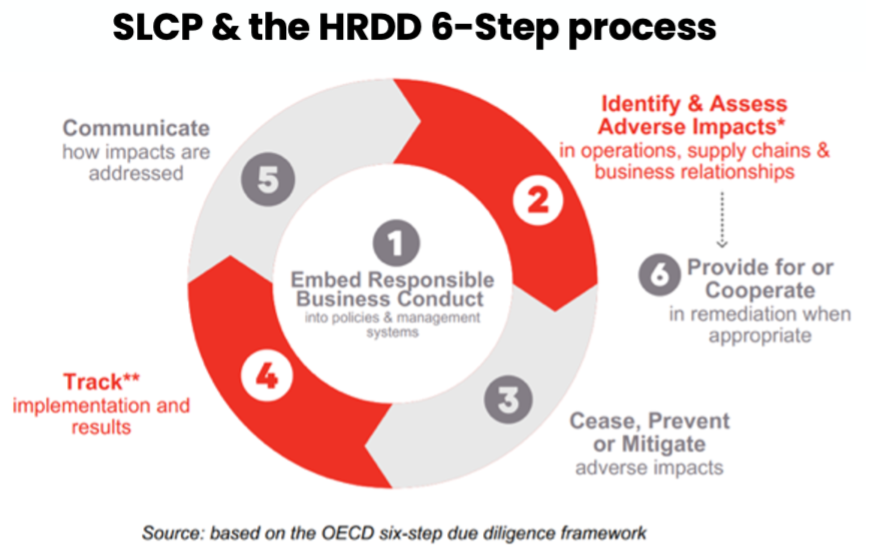
One of the many benefits that Elevate Textiles has experienced since adopting SLCP is its effectiveness in supporting critical human rights due diligence steps – specifically, identifying human rights risks and tracking and monitoring progress.
In their view, SLCP offers a robust framework to collect social and labor data into a comprehensive dataset, enabling them to track performance across all their Tier 2 facilities. This has led to the implementation of corrective actions that help mitigate adverse impacts.
An example of how SLCP is driving improvement for Elevate Textiles
The findings: Through SLCP, Elevate Textiles uncovered potential issues in their facilities related to company guidelines and customer requirements.
The solution: To address the problem, they implemented dedicated tracking systems to enforce and maintain compliance across their facilities. By conducting annual SLCP assessments, they have established a consistent way to measure their progress and sustain these improved standards year-over-year.
The future: Looking ahead, the company is exploring further improvement initiatives focused on extending measurement and visibility of compliance through their supply chain using SLCP.
Jimmy Summers, Elevate Textiles’ Vice President of Environment, Health, Safety, & Sustainability, explained that they use SLCP as their default social compliance auditing program, which has been well-received by most customers. Over 50% of their production volume is now covered by brands that accept SLCP assessments in place of traditional audits.
He emphasized that SLCP's approach of providing one assessment per facility with a unified data set is more efficient than multiple audits. While a few customers still conduct their own audits, Jimmy has encouraged them to adopt SLCP, as it effectively avoids duplication of effort and frees up resources that can be invested in remediation programs.
“We envision everyone in the industry using the same standard to track social and labor conditions across the supply chain, reducing audit fatigue and aligning on targets and improvement actions.”
As a Tier 2 manufacturer, Elevate Textiles demonstrates how SLCP can be effectively implemented deeper in the supply chain. It facilitates the development and implementation of improvement actions, while also creating an opportunity to share progress with customers in a unified place.