On 10 November, SLCP convened 100 of its Signatories to discuss the past, present and future of SLCP at the annual General Assembly.
Held in Istanbul, Türkiye, hosted by İHKİB (Istanbul Apparel Exporters’ Association) and sponsored by Worldly, Décor, Target and LRQA, the event brought together SLCP Signatories to reflect on what has driven SLCP’s success over the past ten years, discuss current priorities, and shape its direction for the decade ahead. It was in Istanbul 10 years ago that SLCP tested the very first version of the CAF with two facilities, so it was a fitting moment to be celebrating in the very same city.
Alongside our SLCP Senior Managers and Board members, we invited a range of key stakeholders and industry experts to speak throughout the day. This resulted in content-rich sessions covering a range of topics from human rights due diligence, remediation, data quality, CAF v2.0, and more.
The event made clear that SLCP remains on solid footing, and our vision and mission continue to be relevant. The Converged Assessment Framework (CAF) is a purpose-built tool, providing credible, actionable data. We are committed to being a multi-stakeholder, non-profit initiative, and we will build on this foundation by seeking complementary collaborations that help drive greater impact.
The Past: SLCP’s journey so far
The morning looked back at how SLCP got here. Opening remarks were from host Mustafa Paşahan, President of İHKİB. He spoke about the persistent problem of audit fatigue for Turkish manufacturers, and the need for inclusion of the manufacturer’s voice.
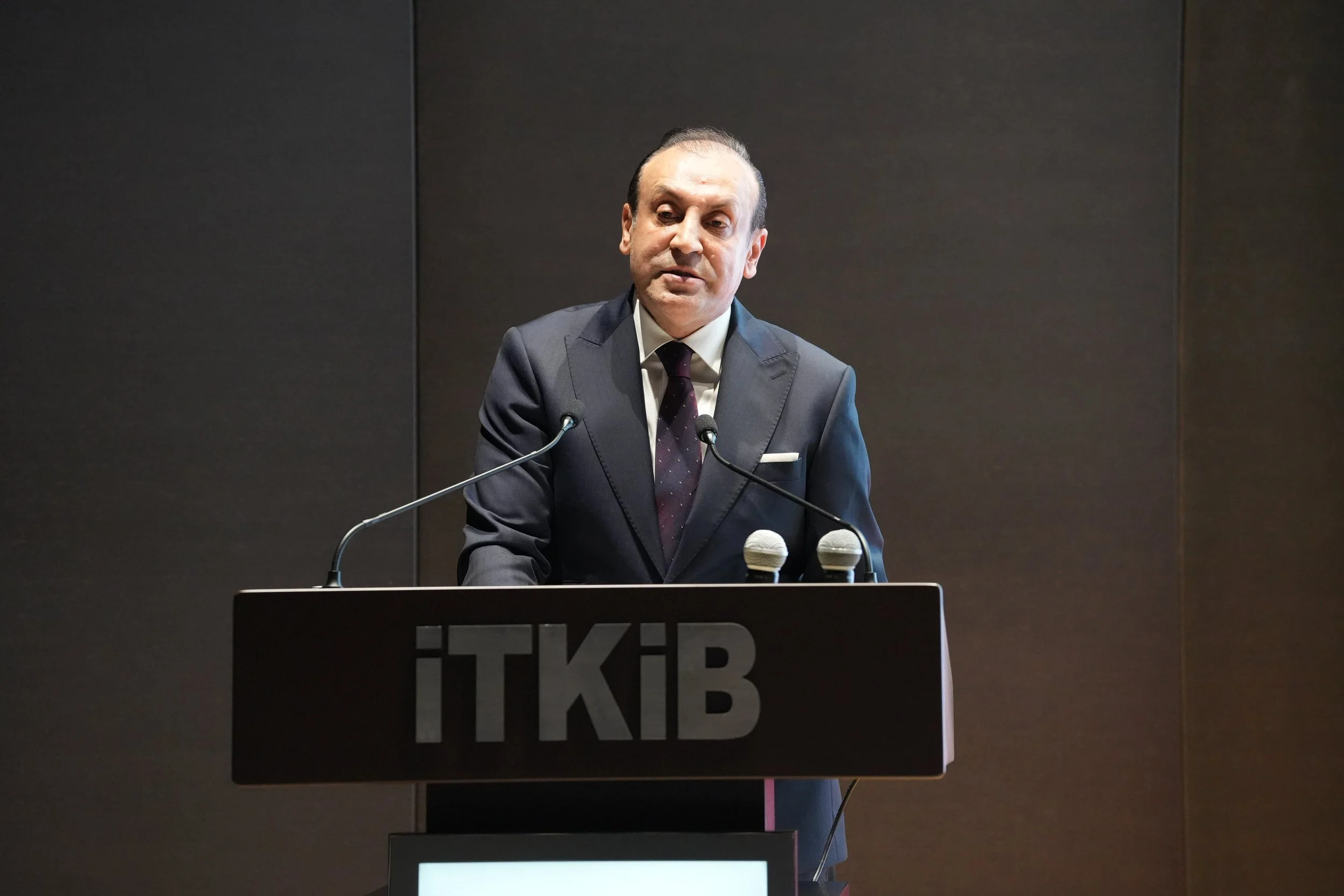
“Our manufacturers do not need more audits. They need more effective, consistent, and mutually recognized assessment systems. The purpose of audits should not simply be to identify shortcomings, but to contribute to addressing them and improving working conditions.
Our shared goal should be to create production facilities with better working conditions, rather than simply facilities that are audited more frequently.”
- Mustafa Paşahan, President of İHKİB
Baptiste Carriere-Pradal (2B Policy) and Tamar Hoek (Solidaridad) then traced SLCP’s evolution, from its founding vision to the global initiative it is today. Next, Janet Mensink (SLCP), Nesrin Başer (SLN Tekstil ve Moda) and Wendy Coyle (Intertek) joined Baptiste and Tamar for “Unfiltered Insights,” a candid panel on the highs, lows, and lessons of the journey so far.
“The education SLCP did on why SLCP was different to some of the other platforms was one of the things that got us excited about it.”
- Wendy Coyle, Intertek
The panel discussion centered around the key drivers of success and the hard-earned lessons that came along with SLCP. Convergence was a common thread across all the panelists’ answers. They noted that getting widespread acceptance of a single data source remains a major challenge, and one we haven’t fully met yet. At the same time, they recognized how far SLCP has come in overcoming obstacles to build the collaborative approach it has today.
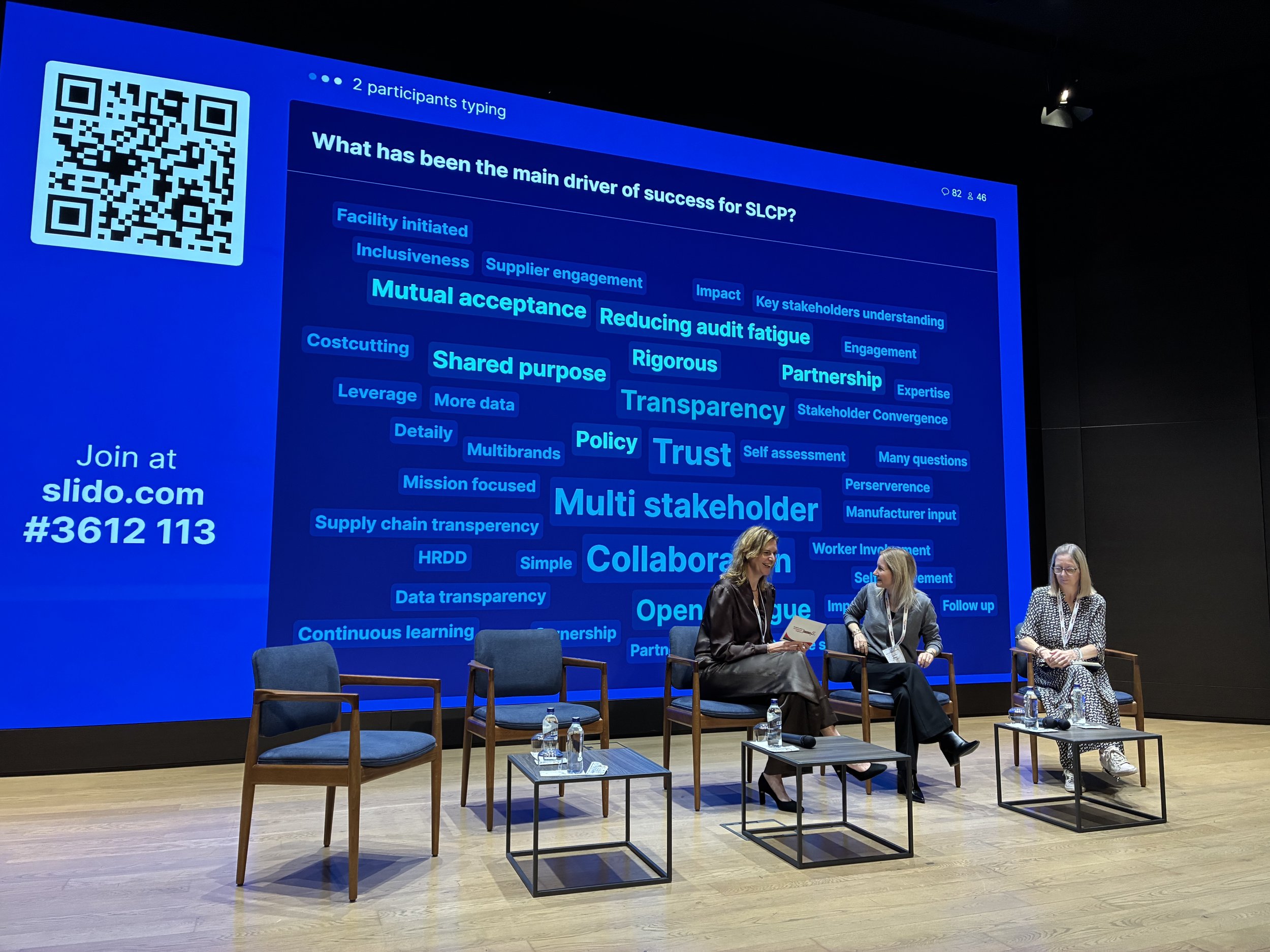
This section of the day ended with an interactive icebreaker: in small groups, participants named what they saw as the main driver of SLCP’s success, and the answers built a live word cloud highlighting trust, multi-stakeholder, transparency and collaboration.
The Present: Introduction to CAF v2.0
Board members Ninh Trinh (Target) and Nikhil Hirdaramani (Hirdaramani Group) brought the audience into the present. They shared personal reflections on SLCP’s resilience, then introduced CAF v2.0, the next generation of the Converged Assessment Framework. They described how the shorter, more relevant self-assessment for facilities, full reporting detail for brands, a sharper focus on risk for verifiers, and alignment with ILO Better Work’s Foundational Data Set.
“We move at the pace of trust.”
- Ninh Trinh, Target & SLCP Board member
We also looked at how CAF v2.0 supports the move from compliance to human rights due diligence, with speakers Tom Mason (SLCP), Hannah Koep-Andrieu (OECD), Annabel Meurs (Fair Wear) and Joe Wozniak (ITC). The group discussed how standardization and the use of common frameworks like the CAF will be important for SMEs as fragmentation threatens the industry.
“One of the most powerful things about the CAF is that it moves us beyond a compliance mindset to a more holistic view of social and labor sustainability... giving policymakers and brands the indicators they need to see the hotspots that need attention and remediation, engaging workers so their voices are heard, and helping suppliers understand due diligence so they can drive change.”
- Joe Wozniak, ITC
The second panel, with Susanne Gebauer (SLCP) and Karin Ekberg (Leadership & Sustainability), discussed SLCP’s data quality and integrity program transformation. Susanne spoke candidly about the successes and challenges of the new models, and describing SLCP’s plans for future.
Susanne also shared the results of the latest SLCP Credibility Survey, which showed trust levels rising across all stakeholders, most notably with brands and retailers increasing 32 percentage points from the previous survey.
After lunch, a Townhall brought together SLCP CEO Janet Mensink, COO Steve Harris and Board Chairs Anna Burger and Michael Cai. Janet reflected on SLCP’s progress and challenges to date. She highlighted how shared data has already unlocked millions of dollars in savings, and 2025 data showing that repeat SLCP users report fewer legal non-compliances than first-time users. She then set out SLCP’s vision for 2030: a reduction in audit fatigue, as well as SLCP data used for policy decisions and to drive collective action that improves working conditions.
"The feature that has made SLCP unique and impactful is the facility ownership."
- Michael Cai, Decor & SLCP Board Chair
The Future: Charting the horizon
SLCP Board members Joleen Ong (Cascale) and Arindama Banerjee (LRQA) led the final section on what the next decade of impact should look like. They opened with personal reflections on audit fatigue, the importance of commercial alignment and responsible purchasing practices, and the potential to turn shared data into shared action.
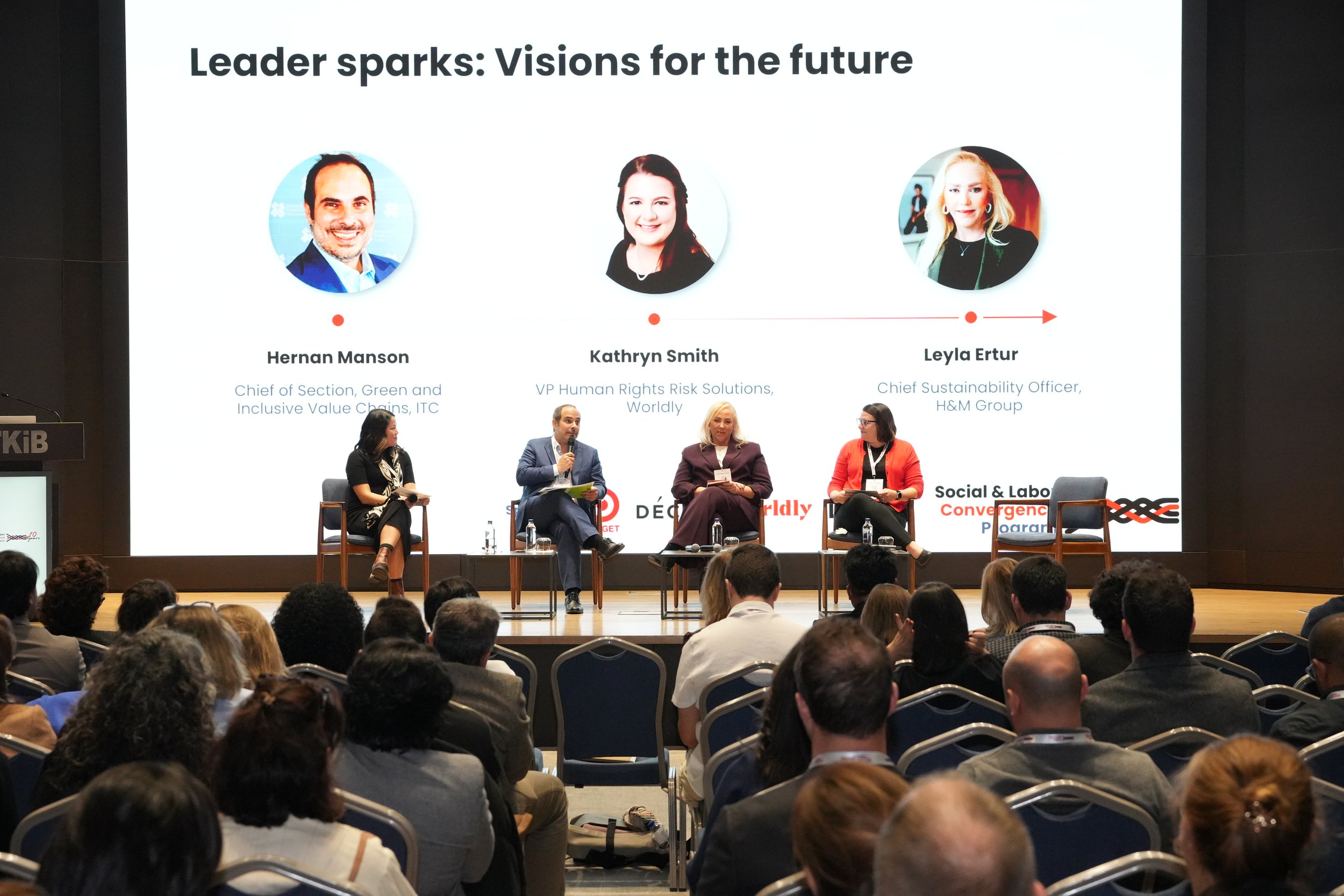
In the short keynote addresses, “Leader Sparks,” Hernan Manson (ITC), Kathryn Smith (Worldly) and Leyla Ertur (H&M Group) each gave a five-minute vision for the future, followed by questions from the audience.
The speakers celebrated how SLCP has built a trusted, shared foundation of verified social and labour data over its first decade. They agreed the next ten years are about putting that data to work, using technology and stronger partnerships to drive decisions, fix problems together and prove real impact for workers and facilities.
Hernan noted that after ten years of strong growth, SLCP’s next step is to make trusted data work harder by turning it into decisions, investment and better outcomes for workers. Kathryn then spoke about how technology and AI can free people to focus on decisions, but only when built on verified data that facilities own and can share across systems, followed by Leyla from H&M Group.
“In a landscape that is often fragmented, creating this degree of alignment around social and labor data is no small achievement.”
- Hernan Manson (ITC)
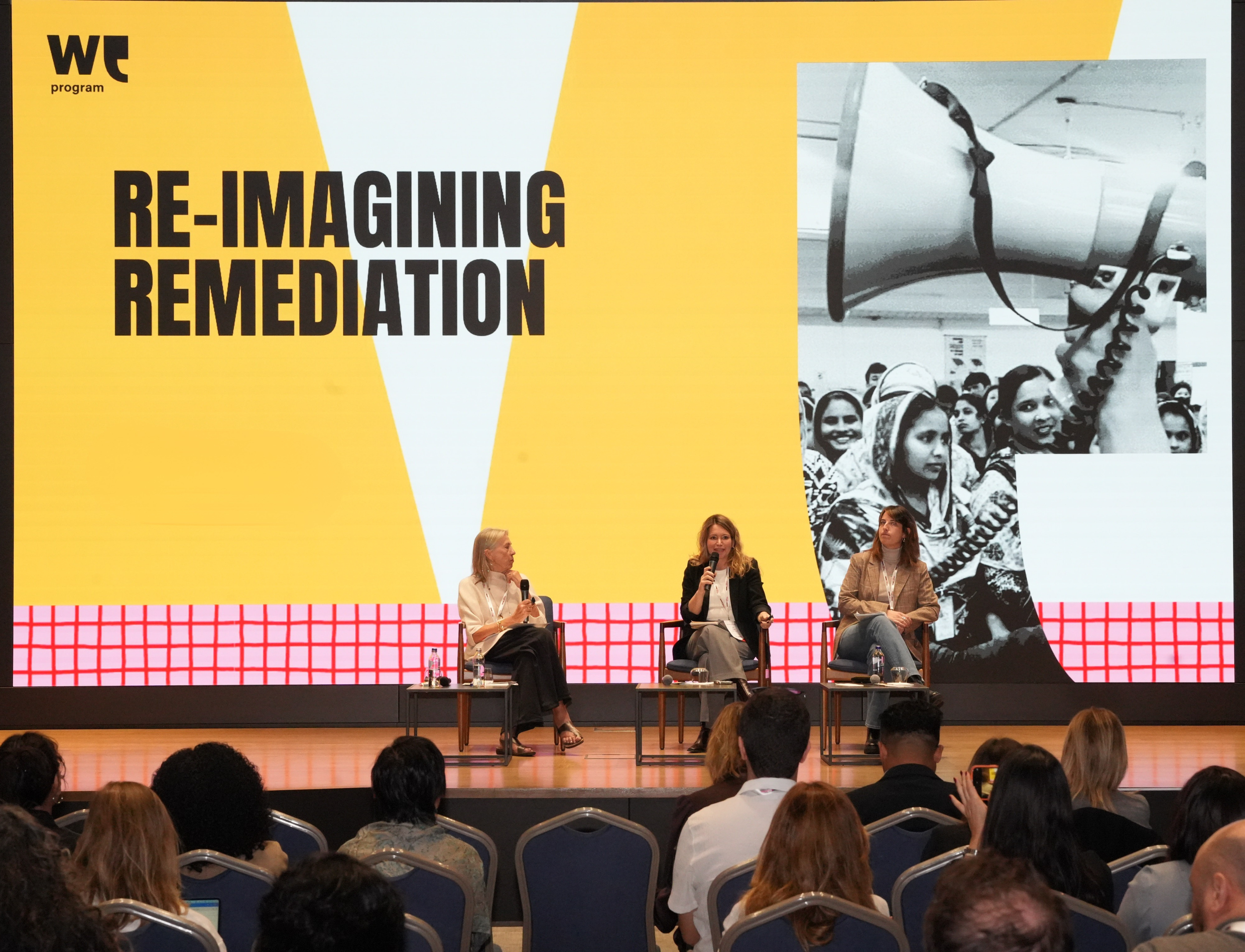
Next, Anna Burger (SLCP Board member) facilitated a session on remediation and impacts on workers with Nikita Grabher-Meyer (BetterWork) and Idil Ander (WE Program). Nikita presented Better Work’s research about working conditions and what drives improvement. Idil discussed how this works in brands’ supply chains. She described the WE Program’s work and its partnership with SLCP as an HRDD Trusted Partner for CAF v2.0. The section ended with consultative breakout groups, where participants discussed visions for SLCP’s future direction.
Closing remarks
In her closing remarks, Janet Mensink reflected on SLCP’s first decade. She summed it up in six themes that ran through the day’s content-rich sessions: convergence, credibility, compromise for consensus, complementarity, collaboration and collective action.
Janet thanked the audience for their valuable feedback and suggestions. She noted that one of SLCP’s greatest strengths is its ability to keep improving and evolving to meet stakeholders’ needs. Reflecting personally on the 10-year journey, she named passion and friendship as two essential ingredients in the organization’s success.
Michael Cai (Décor and SLCP Board Chair) closed the day with a special teşekkür ederim (thank you) to our host, İHKİB, and to the day’s sponsors, Worldly, Décor, Target and LRQA, for making the General Assembly possible.
Michael set out three commitments for the future: staying true to SLCP’s vision and mission, which defines who we are; upholding our values and culture, which will guide an evolving and growing multi-stakeholder organization; and staying open, innovative and collaborative, so we continue to find new ways to turn ambition into action, and action into impact.
We’d also like to thank all our speakers for sharing their time and insights, and everyone who attended for their energy, enthusiasm and contributions throughout the day.
Finally, congratulations to the SLCP team, whose hard work made the day such a success. We look forward to building SLCP’s next decade together!